China Stepper Motor Shaft Manufacturer

Custom & OEM stepper motor shafts for automation, robotics, and motion control applications.
-
Custom diameters, lengths, and shaft end designs
Engineered to your exact specifications
-
Tight tolerance control for stepper motor applications
Precision CNC machining for smooth rotation
-
Flexible MOQ for prototypes and mass production
From small batch validation to stable supply
Page Contents
Stepper Motor Shaft
What Is a Stepper Motor Shaft?
In stepper motor assemblies, the shaft is the mechanical interface between the motor and the driven system. It connects directly to couplings, pulleys, gears, or lead screws and determines how motor torque and positioning accuracy are transmitted to the load.
From a manufacturing perspective, a stepper motor shaft is not a generic turned part. Its diameter, length, concentricity, and shaft-end geometry are defined by the motor design and the installation method of the application.
Types of Stepper Motor Shafts We Manufacture
Stepper motor shafts are manufactured in different configurations to match motor designs, mounting methods, and transmission requirements.

Single Output Shaft
Standard configuration extending from one side. Connects directly to couplings, pulleys, or gears.
- Accurate diameter for coupling fit
- Controlled runout for stable rotation
Double Output Shaft
Extensions on both ends. Front transmits power, rear for encoders or handwheels.
- Coaxial alignment front & rear
- Balanced machining, no vibration
Hollow Shaft
Through-bore design for cables, air lines, or lead screws to pass through center.
- Concentricity: bore & outer diameter
- Uniform wall thickness

D-Cut & Keyed Shaft
Flat or keyed ends for anti-slip coupling and positive torque transmission.
- D-cut for anti-slip coupling
- Keyway for torque transmission

Threaded & Knurled
Threaded ends for axial fixation, knurled shafts for press-fit assemblies.
- Thread for axial fixation
- Knurl for press-fit grip
Fully Custom Shafts
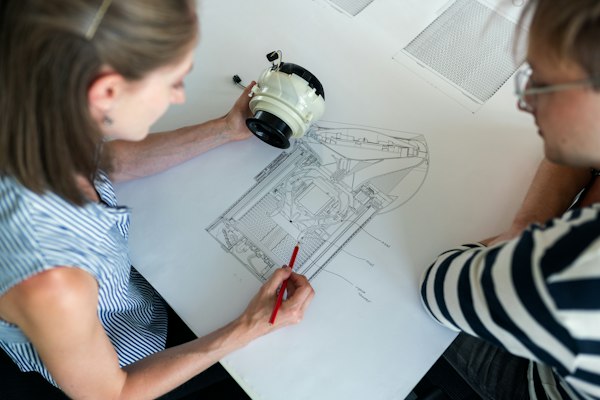
Manufactured to your drawings. Non-standard dimensions, special tolerances, combined features.
- Custom dimensions & tolerances
- Material & heat treatment options
To support these different shaft types, machining accuracy and tolerance control play a critical role in stepper motor shaft performance.
Custom Capabilities for Stepper Motor Shafts
We manufacture stepper motor shafts based on standard motor designs as well as fully customized requirements. Our custom capability focuses on dimensional accuracy, shaft-end machining, and batch consistency for OEM and long-term supply projects.

Custom Dimensions & Shaft Geometry
Stepper motor shafts can be customized to match specific motor and system requirements. This allows the shaft to integrate directly into the motor and transmission system without secondary machining.
- Shaft diameter and length based on motor size
- Single output, double output, or hollow shaft structures
- Special shaft-end geometries for direct assembly
Shaft-End Machining for Assembly
The shaft end is often the most application-specific part. Shaft-end features are machined according to drawing requirements to ensure repeatable assembly in batch production.
- Flat or D-cut surfaces for anti-slip coupling
- Keyways for torque transmission
- Threaded ends for axial locking
- Knurled surfaces for press-fit assemblies

Material & Heat Treatment Options
Stepper motor shafts are produced using materials selected based on load, speed, and durability requirements. Material selection and processing are confirmed during drawing review to match application conditions.
- Carbon steel and alloy steel options
- Heat treatment for strength and wear resistance
- Surface treatments for corrosion protection
Batch Consistency & Repeat Production
For OEM and long-term supply projects, consistency is as critical as initial accuracy. This helps reduce assembly variation and after-sales issues in continuous production.
- Stable dimensions across production batches
- Controlled machining processes for repeatability
- Inspection standards aligned with customer drawings
Technical Specifications & Tolerance Control
The specifications below indicate the typical manufacturing range for stepper motor shafts. Final dimensions and tolerances are confirmed based on customer drawings.
Typical Dimensional Range
What structures are within our manufacturing capability?
| Item | Typical Range |
|---|---|
| Shaft Type | Solid / Hollow |
| Shaft Diameter | According to motor size |
| Shaft Length | Based on application |
| Shaft Structure | Single / Double output |
| Shaft End | D-cut / Keyed / Threaded / Knurled |
Have specific tolerance or material requirements? Send us your drawing for review.
How Your Stepper Motor Shafts Are Manufactured
When you source stepper motor shafts from us, production follows a clear and controlled process. Each step is designed to reduce risk, avoid misinterpretation, and ensure your shafts can be assembled without rework.
Drawing Review Before Production
Before any material is cut, your drawing or specification is reviewed by our engineering team. This step ensures shaft structure, critical dimensions, and tolerance requirements are fully understood and manufacturable.
If anything needs clarification, it is discussed with you in advance rather than corrected later in production.

Material Preparation Based on Your Application
Raw material is selected according to your confirmed specifications. Material grade, size, and basic quality are checked to make sure they match the mechanical and durability requirements of your stepper motor application.
This helps avoid variation at the very first stage of production.
CNC Machining for Shaft Geometry and Fit
Your stepper motor shafts are machined using CNC turning and related processes to achieve the required diameter, length, and shaft-end geometry. Attention is focused on features that directly affect assembly: coupling fit, shaft alignment, and surface condition.
For hollow or double-output designs, additional controls are applied to maintain consistency.
Heat Treatment and Surface Processing
If your application requires higher strength, wear resistance, or specific surface properties, heat treatment or surface processing is applied accordingly. Processes are selected based on your requirements rather than default settings.
Dimensional stability is checked after treatment to ensure accuracy is maintained.
Final Inspection Before Shipment
Before packing, each batch of stepper motor shafts is inspected against the confirmed drawing requirements. Critical dimensions, runout, and other agreed control points are verified.
This ensures the shafts can be assembled directly into your motors or systems.
Packing for Safe Handling and Delivery
Finished shafts are packed to protect machined surfaces during storage and transportation. Packing methods are selected based on shaft structure, surface condition, and shipment type.
Ensuring the parts arrive ready for use without damage or corrosion.
To make sure this process delivers consistent results, quality control and inspection are applied throughout production — not just at the final stage.
Quality Control & Inspection for Your Stepper Motor Shafts
Quality control is integrated into manufacturing from the first operation to final inspection. The goal is not only to meet drawing requirements, but also to ensure consistency across batches so your shafts assemble smoothly every time.
Control Points From Drawing
Quality control starts with your drawing, not with a generic checklist. Critical dimensions and tolerances are identified in advance so inspection focuses on what matters.
In-Process Checks
Key dimensions are checked at defined stages during machining instead of waiting until the end. This allows deviations to be corrected early, reducing scrap.
Runout & Concentricity
Shafts are inspected for characteristics that directly influence motor performance. Runout and concentricity ensure stable rotation and proper coupling alignment.
Hardness Verification
When heat treatment is required, hardness and treatment results are verified according to confirmed specifications. This ensures mechanical strength meets operating conditions.
Final Inspection
Finished shafts undergo final inspection based on agreed control points. Only parts meeting confirmed requirements are released. Inspection records available on request.
Need Inspection Reports?
We provide detailed inspection records and certificates when required for OEM documentation or quality system compliance.
Typical Applications
Stepper motor shafts manufactured for motion control applications across diverse industries — from automation equipment to precision medical devices.
Automation Equipment
Used in positioning, feeding, and indexing mechanisms where reliable assembly and repeatable motion are required.
Robotics & Motion Modules
Applied in compact or integrated mechanical designs that require customized shaft geometry and stable rotation.
Medical & Laboratory Devices
Specified for equipment that depends on precise, repeatable movement and long-term dimensional stability.
Packaging & Labeling Machines
Used in continuous-operation systems where durability and consistent coupling fit are important.
3D Printers & Precision Positioning
Commonly paired with pulleys or direct-drive components that require accurate shaft geometry.
Different Application?
Tell us about your specific use case and we'll confirm if our shafts are a good fit.
Not sure if your application qualifies? We're happy to review your requirements.
Why Choose Our Stepper Motor Shaft Factory
Choosing a supplier is not only about part cost. It's about whether the factory understands your application, controls production risks, and can support you beyond a single order.
Shaft-Specific Expertise
Not general machining

Stepper Motor Shaft Sourcing Questions
Common questions from OEM buyers and procurement teams about custom shaft manufacturing, quality control, and supply support.
Have a question not covered here? We're happy to clarify.
Request Engineering Feedback
Share your shaft requirements. Our team will review and respond within 24 hours.
Direct Contact
Prefer a direct conversation? Reach our engineering team.