China Servo Motor Shaft Manufacturer

Drawing-based manufacturing for OEM servo motor applications, with tight tolerance control, in-house heat treatment, and stable batch consistency.
-
Custom servo motor shafts based on drawings or samples
OEM specifications welcome
-
Tolerance control up to ±0.005 mm
Precision CNC grinding for critical dimensions
-
In-house heat treatment & shaft grinding
Full process control under one roof
-
Dynamic balancing for high-speed servo motors
Smooth operation at rated speeds
Engineering review included · 24–48h response
Page Contents
Servo Motor Shaft
What Is a Servo Motor Shaft?
If you are working with a servo motor, the shaft is not just a rotating part — it is a critical precision component that directly affects positioning accuracy, motion stability, and system reliability.
A servo motor shaft is the mechanical output shaft of a servo motor. It transfers torque and motion from the motor to couplings, gearboxes, pulleys, or other driven components. At the same time, it must maintain high concentricity and minimal runout, especially when encoders or feedback systems are involved.
Why the Shaft Matters More Than You Might Expect
When you use a servo motor, even a small shaft issue can lead to noticeable system problems. Excessive runout, poor concentricity, or inconsistent hardness can cause vibration, encoder errors, premature bearing wear, or unstable motion control.

Tighter Dimensional Tolerances
Servo applications demand precision. Even minor diameter deviations can affect coupling fit and introduce positioning errors.

Better Surface Finish
Bearing and seal areas require fine surface finish to reduce friction, prevent leakage, and extend service life.

Controlled Heat Treatment
Proper hardening ensures strength and fatigue resistance for high-cycle servo operation without deformation.

Accurate Fit with Couplings
Keyways, splines, and shaft ends must match precisely to avoid backlash and ensure reliable torque transmission.
If the shaft quality is unstable, the overall servo system performance will suffer
— even if the motor itself is high-end.
Typical Applications of Servo Motor Shafts
Servo motor shafts are widely used in motion systems where precision, repeatability, and dynamic response are critical. If your equipment relies on accurate positioning or stable speed control, the shaft plays a direct role in overall system performance.
Industrial Automation Equipment
In automated production lines, servo motors control positioning, speed, and synchronization. The shaft must maintain consistent concentricity and fit accuracy, even under continuous start-stop operation.
CNC Machines and Machine Tools
Servo motor shafts in CNC systems connect to ball screws or gearboxes. You rely on the shaft to deliver smooth rotation, low vibration, and precise torque transmission during high-speed machining.
Robotics and Robotic Arms
In robotic applications, servo motors operate with frequent direction changes and varying loads. The shaft must handle fatigue stress and maintain alignment with encoders over long operating hours.
Packaging and Assembly Machinery
Packaging machines depend on fast, repetitive motion with tight timing control. Shaft balance and dimensional consistency are essential to avoid vibration, noise, and unexpected downtime.
Semiconductor and Precision Equipment
In precision equipment, even small mechanical deviations can affect process accuracy. Shafts often require tighter tolerances and controlled surface finish under clean environments.
Not Sure About Your Application?
Send us your drawing or application details. Our engineering team will review and provide feedback within 24–48 hours.
Common Servo Motor Shaft Problems in Precision Motion Systems
When servo motor performance is unstable, the issue is often traced back to the shaft — not because the design is wrong, but because key manufacturing details were overlooked.
If you are evaluating or sourcing servo motor shafts, the problems below may look familiar. These issues usually appear during assembly, testing, or long-term operation, and they directly affect motion accuracy and system reliability.
70%
Traced to Shaft
5
Common Issues
48h
Review Time
Excessive Shaft Runout at Operating Speed
You may find that the shaft measures within tolerance during inspection, but shows noticeable runout once the motor is running at speed. This often leads to vibration, unstable motion, or noise that only appears under real operating conditions.
In many cases, the issue is related to machining consistency or insufficient attention to shaft balance during manufacturing.
Vibration Affecting Encoder Accuracy
Even small shaft deviations can interfere with encoder feedback. If you notice unstable positioning, signal fluctuation, or repeatability issues, the shaft's concentricity and surface quality may be contributing factors.
This type of problem becomes more critical in applications that rely on precise closed-loop control.
Inconsistent Shaft Hardness Between Batches
A common issue in long-term supply projects is inconsistent performance between batches. Samples may perform well, while later production shows differences in wear resistance or fatigue life.
This is often linked to uncontrolled heat treatment processes or variations in material handling during production.
Coupling or Bearing Fit Issues During Assembly
If couplings or bearings feel too tight, too loose, or require on-site adjustment, the problem is rarely the component itself. Small deviations in diameter, roundness, or surface finish can cause assembly difficulties.
These issues increase assembly time and raise the risk of hidden defects.
Premature Bearing Wear or Abnormal Noise
Unusual bearing noise or early bearing failure is sometimes blamed on the bearing supplier, but the shaft surface condition and geometry play a major role.
Poor surface finish, misalignment, or runout can significantly shorten bearing life and affect long-term performance.
Manufacturing Capabilities
When you source servo motor shafts, machining accuracy alone is not enough. What matters is whether key functional features stay stable after assembly and during operation.
The capabilities below focus on the areas that directly affect runout, vibration, encoder accuracy, and long-term reliability.
Precision Turning and Grinding
Bearing seats, coupling interfaces, and seal areas are the most sensitive sections. Turning establishes geometry, while grinding provides tighter control over diameter, roundness, and surface finish for high-speed operation.

Concentricity Control
The relationship between journals, shoulders, and encoder-related sections directly affects feedback accuracy. Concentricity is controlled across the entire functional axis to reduce alignment-related issues after assembly.
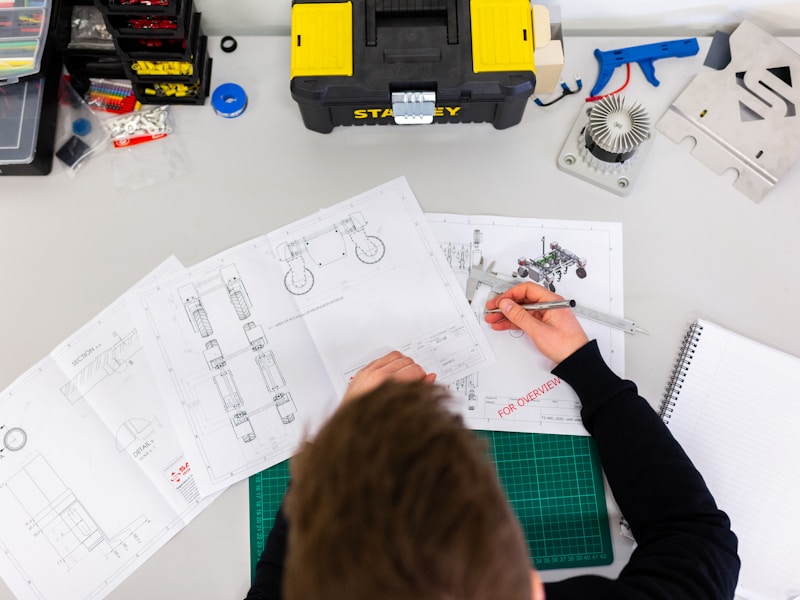
In-House Heat Treatment
Performance differences between batches are often linked to heat treatment variation. By handling this in-house, hardness levels and material behavior remain consistent from samples to repeat orders.

Shaft Balancing
Dimensional accuracy alone does not eliminate vibration. For higher-speed servo systems, balancing is applied to reduce vibration during real operating conditions, not just during inspection.
Stable Processes
Projects often start with small quantities and move into ongoing supply. Process parameters are kept consistent so parts approved during sampling behave the same way during series production.

Have a Drawing Ready?
Send us your shaft drawing or sample specifications. Our engineering team will review manufacturability and provide feedback within 24–48 hours.
±0.005
mm Tolerance
48h
DFM Review
Custom Servo Motor Shaft Specifications
Every servo motor shaft project is different. The specifications below show the typical ranges we work with, so you can quickly check whether your design falls within a feasible manufacturing scope.
| Specification Item | Typical Range / Option | Notes |
|---|---|---|
| Shaft Diameter | Ø6 – Ø60 mm | Functional areas may require tighter control |
| Shaft Length | Up to 600 mm | Depends on geometry and straightness requirement |
| Dimensional Tolerance | Up to ±0.005 mm | Applied to bearing / encoder related sections |
| Concentricity | Up to 0.005 mm | Defined between functional diameters |
| Surface Finish | Ra 0.4 – 1.6 | Bearing and seal areas |
| Material Options | Alloy steel, carbon steel, stainless steel | Based on load and environment |
| Heat Treatment | Induction, quenching & tempering | In-house controlled |
| Shaft Features | Keyway, spline, thread, step shaft | Drawing-based |
| Balancing | Available if required | For high-speed servo applications |
| Production Volume | Prototype to series production | Stable repeat supply supported |
Servo motor shafts are rarely defined by numbers alone.
Features such as shoulders, reliefs, encoder mounting areas, and transition radii often determine manufacturability and performance.
Sharing a drawing or sample allows these details to be reviewed before any commitment is made.
Quality Control
When you source servo motor shafts, the real risk is not whether one part meets the drawing — it is whether every part performs the same way after assembly and during operation.
Quality control for servo motor shafts focuses on functional accuracy and consistency, especially on features that affect runout, vibration, and long-term reliability.

Incoming Material Verification
Material variation is one of the most common hidden causes of performance inconsistency. Before machining begins, raw materials are checked against specified grades and conditions to ensure they match the intended mechanical requirements.
In-Process Control on Functional Dimensions
Critical dimensions are monitored during machining, not only at the final stage. Bearing seats, encoder-related sections, and coupling interfaces are checked during production to prevent deviation from accumulating across processes.
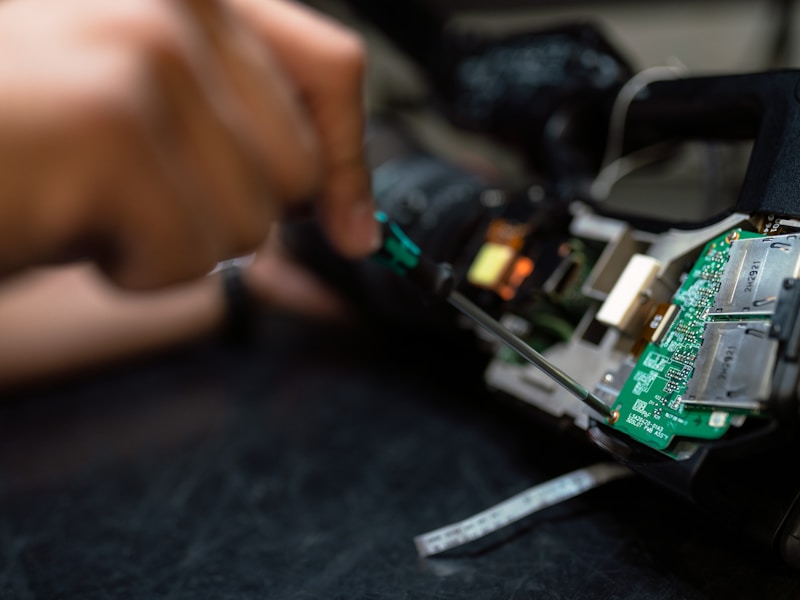
Runout and Concentricity Inspection
For servo motor shafts, runout and concentricity are often more important than individual diameter values. These characteristics are inspected based on functional references, reflecting how the shaft actually works in the motor system.
Heat Treatment and Post-Treatment Verification
After heat treatment, shafts are checked to confirm hardness levels and dimensional stability. This step ensures that mechanical properties remain consistent and that no distortion affects functional areas.
Particularly important for repeat orders, where long-term batch consistency is required.
Final Inspection Before Shipment
Before shipment, shafts undergo final inspection covering critical dimensions, surface condition, and overall geometry. Only parts that meet functional and dimensional requirements proceed to packing, reducing the risk of unexpected issues during assembly or commissioning.
Is This the Right Supplier for Your Project?
You may be comparing multiple servo motor shaft suppliers. The table below helps you quickly check whether your project requirements align with the way this supplier typically works.
A good match usually leads to smoother communication, fewer revisions, and more stable long-term supply.
| Your Project Situation | Is This Supplier a Good Fit? |
|---|---|
| You need custom servo motor shafts based on drawings or samples | Yes |
| Tight control on runout, concentricity, or encoder alignment is critical | Yes |
| You expect consistent performance across batches | Yes |
| Your project starts with samples and may move into series production | Yes |
| Engineering feedback before production is important to you | Yes |
| Your design is still evolving and needs technical discussion | Good fit |
| You are mainly looking for the lowest unit price | Not ideal |
| You need off-the-shelf stock shafts for immediate delivery | Not ideal |
| Your project requires ultra-high-volume automotive-level production | Depends on scope |
- You need custom servo motor shafts based on drawings or samples
- Tight control on runout, concentricity, or encoder alignment is critical
- You expect consistent performance across batches
- Your project starts with samples and may move into series production
- Engineering feedback before production is important to you
- Your design is still evolving and needs technical discussion
- You are mainly looking for the lowest unit price
- You need off-the-shelf stock shafts for immediate delivery
- Your project requires ultra-high-volume automotive-level production
If your project matches the situations above, the next step is a brief technical discussion.
OEM Cooperation Process
Working with a servo motor shaft supplier should feel predictable, not uncertain. The steps below show how your project typically moves forward, so you know what to expect before committing time or resources.
Share Drawing or Sample
Share a drawing, 3D file, or physical sample. Key functional areas are reviewed from a manufacturing perspective.
Engineering Review
Drawing reviewed for manufacturability and risk points before any price is given. Issues discussed early.
Clear Quotation
Quotation based on reviewed drawing and confirmed scope. No hidden assumptions in pricing or lead time.
Sample Production
Samples or pilot batch produced. Goal is confirming performance in your application, not just speed.
Evaluation & Approval
You evaluate samples in your assembly or test environment. Adjustments discussed before moving forward.
Series Production
Same manufacturing logic carried into production. Critical parameters unchanged from approved samples.
Ongoing Supply
Repeat orders follow approved process. Batch consistency maintained without repeated validation.
Share Drawing or Sample
Share a drawing, 3D file, or physical sample for manufacturing review.
Engineering Review
Manufacturability and risk points reviewed before quotation.
Clear Quotation
Pricing based on confirmed scope. No hidden assumptions.
Sample Production
Samples produced to confirm performance in your application.
Evaluation & Approval
You evaluate samples. Adjustments discussed before series production.
Series Production
Same process carried into production. Parameters unchanged.
Ongoing Supply
Repeat orders follow approved process. Batch consistency maintained.
Custom Servo Motor Shaft for Industrial Automation
Custom shaft manufactured based on customer drawings, with tight control on bearing seats and coupling interfaces for stable positioning in automated equipment.




Servo Motor Shaft Manufacturing FAQs
Common questions from engineers and procurement teams evaluating custom servo motor shaft suppliers.
Have a question not covered here? We are happy to discuss your specific requirements.
Request Engineering Feedback
Share your servo motor shaft requirements or drawings. Our engineering team will review and respond within 24 hours.
Direct Contact
Prefer a direct conversation? Reach our engineering team for servo shaft inquiries.